How to Measure Ceiling Height for a Car Storage Lift?

Time:2026-09-15 Author:Sienna
0%

Choosing a storage lift begins with one practical question: How to measure ceiling height for a car storage lift? The answer is more careful than stretching a tape measure from the floor upward. You must identify the lowest fixed obstruction, including beams, garage-door tracks, lights, sprinklers, and open doors. A few inches can decide whether two vehicles fit safely.

Bob O’Gorman, former president of the Automotive Lift Institute, says, “Lift planning should begin with accurate measurements and the manufacturer’s published specifications.” That principle matters because every lift has different rise, platform, and clearance requirements. Measure from the finished floor to the lowest overhead point. Take readings at several locations. Ceilings are not always level. Mine once looked uniform but varied noticeably near the garage door.

Record the tallest vehicle, including roof racks, antennas, and an open hatch. Add the lower vehicle’s height, the lift’s raised height, and the required safety clearance. Then compare that total with the smallest ceiling measurement, not the most convenient one. Check the lift manual before ordering. Manufacturer drawings often reveal necessary space above the platform, beside the posts, and around the power unit.

Do not rely on memory.

A rushed measurement can create expensive problems. The car may touch a beam, block the door, or leave too little working space. Recheck every figure, preferably with a second person. A simple sketch with dimensions can expose conflicts before installation. This guide explains the measuring process clearly, while acknowledging an uncomfortable truth: garage spaces rarely behave as neatly as their original plans suggest.
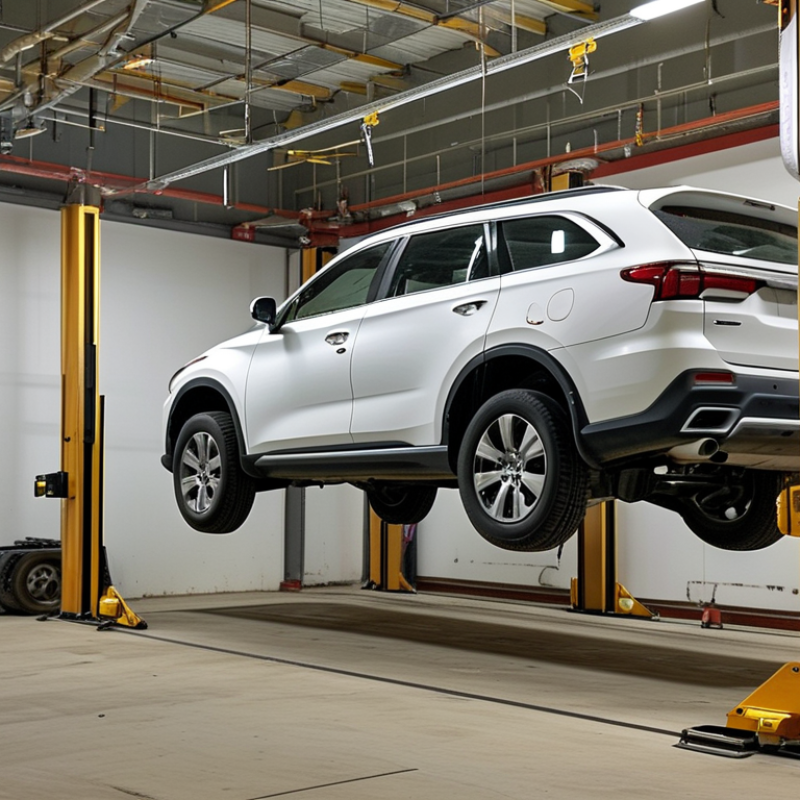
How to Measure Ceiling Height for a Car Storage Lift?

Identify the Lift Type and Required Vehicle Clearance

Ceiling height is not the only number that matters. Start by identifying the lift type and its movement pattern. A two-post lift usually raises the vehicle higher beneath the roof. A four-post lift may need less lifting height, but its platforms add vertical thickness. Scissor lifts vary widely, so their collapsed and raised dimensions must be checked carefully.

Measure the tallest vehicle, including roof racks, antennas, and open hatchbacks. Add the lift’s maximum raised height and the vehicle’s required working clearance. Then compare that total with the lowest ceiling obstruction. Lights, beams, garage doors, and sprinkler pipes can reduce usable height. Leave extra space above the vehicle, not just above the lift structure. Ten to twelve inches may be practical, but the lift instructions should control the final figure.

Use a steel tape measure and record several points across the parking area. Sloped floors can change the result. A simple calculation is: vehicle height plus lift rise plus overhead clearance. Check the manufacturer’s installation data and confirm the concrete slab can support the equipment. A qualified installer can verify anchoring, clearance, and vehicle balance. Measurements can still be wrong. I would recheck them after marking the lift footprint, especially near a garage door or ceiling light. Never rely on the highest ceiling point. Use the lowest obstruction.

How to Measure Ceiling Height for a Car Storage Lift? - Identify the Lift Type and Required Vehicle Clearance

Lift Type Typical Lifted Vehicle Clearance Typical Lift Structure Allowance Recommended Minimum Ceiling Height Suitable Vehicle Examples Key Measurement Notes
Low-rise scissor lift Approximately 48–60 in (1.22–1.52 m) Approximately 6–12 in (0.15–0.30 m) 7–8 ft (2.13–2.44 m) Sedans, coupes, and some compact SUVs Measure the highest point of the vehicle and include the lift platform, arm, or ramp height.
Mid-rise scissor lift Approximately 36–48 in (0.91–1.22 m) Approximately 6–12 in (0.15–0.30 m) 6–7 ft (1.83–2.13 m) Passenger cars and low-profile vehicles Check whether the lift raises the vehicle high enough for standing access; ceiling clearance is usually not the main limitation.
Two-post lift Approximately 60–72 in (1.52–1.83 m) Approximately 12–24 in (0.30–0.61 m) 11–12 ft (3.35–3.66 m) Cars, crossovers, and light-duty trucks Measure from the finished floor to the lowest ceiling obstruction, not merely to the nominal ceiling surface.
Four-post storage lift Approximately 60–72 in (1.52–1.83 m) Approximately 12–24 in (0.30–0.61 m) 11–12 ft (3.35–3.66 m) Sedans, sports cars, SUVs, and light trucks Account for the deck, runways, posts, locking position, and the stored vehicle’s roof height.
Single-column parking lift Approximately 60–72 in (1.52–1.83 m) Approximately 12–24 in (0.30–0.61 m) 11–12 ft (3.35–3.66 m) Passenger vehicles where floor space is limited Verify the required headroom around the moving platform and any overhead safety components.
Double-stacking parking lift Two vehicle spaces stacked vertically Usually requires two vehicle-height zones plus platform and operating clearance 12–15 ft (3.66–4.57 m) Two sedans or a sedan paired with a lower vehicle The required height depends strongly on the combined heights of both vehicles and the selected stopping position.
High-clearance parking lift Approximately 72–84 in (1.83–2.13 m) for the lower vehicle zone Approximately 18–30 in (0.46–0.76 m) 14–16 ft (4.27–4.88 m) SUVs, pickup trucks, vans, or mixed vehicle storage Use the tallest vehicle intended for either level when calculating the required ceiling height.
Basic Ceiling-Height Calculation
Required ceiling height = lifted vehicle height + lift structure height + operating clearance. A practical planning allowance for operating clearance is typically 6–12 in (0.15–0.30 m), but the lift’s installation manual should always take precedence.
Measurement Checklist
  • Measure from the finished floor to the lowest obstruction, including beams, ductwork, lights, garage-door tracks, and openers.
  • Measure the actual vehicle height with roof racks, antennas, cargo boxes, or other permanent accessories installed.
  • Allow for the lift deck, runways, columns, overhead crossbars, locks, and moving components.
  • For two-vehicle storage, calculate the combined height of both vehicles rather than using only one vehicle’s dimensions.
  • Confirm the final dimensions, load rating, anchoring requirements, and safety clearances in the selected lift’s technical documentation.

Measure the Garage Floor-to-Ceiling Distance

Measuring garage floor-to-ceiling distance is the foundation of a safe car storage lift installation. Use a rigid steel tape, not a flexible measuring cord. Measure from the finished garage floor to the lowest ceiling point. Take readings near both walls and in the center. Ceilings often vary more than expected. Record the smallest measurement. I once measured beneath an open ceiling and missed a low beam. That small error changed the usable clearance.

Next, measure the vehicle’s full height, including roof accessories, antennas, or a raised hatch. Add the lift platform height and the space needed above the stored vehicle. The lowest overhead obstruction controls the design. Check garage door tracks, lighting, pipes, beams, and automatic door equipment. A lift may fit on paper but still interfere with daily garage use. Review the lift’s required ceiling height, floor thickness, and anchoring conditions with a qualified installer.

Tips: Measure twice, and write every result down. Keep the tape perfectly vertical. Use a laser level if the floor is uneven. Mark the lowest ceiling point with removable tape. Leave practical clearance for opening doors and walking beneath the vehicle. Recheck the measurement after installing insulation, lights, or storage racks. My own measurements improved when I stopped trusting a single center-point reading.

Account for Vehicle Height and Lift Operating Space

Measuring a ceiling for a car storage lift starts with the vehicle, not the lift.
Record the tallest vehicle height, including roof racks, antennas, and an open hatch. SAE J1100 provides standardized vehicle dimension terminology, but real vehicles can differ from catalog figures. Measure your own car on level ground. Small errors become expensive overhead problems.

Calculate the required height as vehicle height, lifting travel, and operating clearance. Add space for suspension movement, tire inflation changes, lighting, and garage-door tracks. A practical working allowance is often 150–300 millimeters above the raised vehicle, but the lift’s installation manual must control. ANSI/ALI ALCTV-2017 addresses automotive lift construction and safety requirements; it does not replace a site-specific clearance check. The ceiling may be high enough, yet the door opener may not be.

Consider every parking position. A tall SUV may fit beneath the ceiling, while a pickup with accessories may not. The 2024 EPA Automotive Trends Report shows continued dominance of larger light-duty vehicles, so planning around one small sedan is increasingly weak. I would measure the highest vehicle twice, with the lift unloaded and loaded. That sounds excessive. It is cheaper than discovering a roof contact mark later. Include slab thickness, concrete joints, sprinklers, beams, and suspended fixtures before choosing the lift’s maximum rise. Recheck the calculation after installation, because real garages rarely match the drawing perfectly.

Check Overhead Obstructions and Structural Limitations

Measuring ceiling height for a car storage lift requires more than stretching a tape measure upward. Measure from the finished floor to the lowest overhead point. Check several locations, because ceilings may slope or change height near walls. A tape measure alone can mislead.

Open the garage door and inspect its tracks, hinges, springs, and motor. These parts often hang lower than the ceiling. Mark pipes, ductwork, lighting fixtures, sprinklers, storage racks, and door openers. Measure each obstruction from the floor. Include the vehicle’s roof height, lift platform thickness, and the clearance needed above the car. Moving a vehicle can create unexpected contact. Leave practical space for inspection and maintenance.

Structural limitations deserve equal attention. Identify whether the lift will stand on a concrete slab, raised floor, or repaired surface. Check the slab thickness, condition, reinforcement, and rated load capacity through construction records or a qualified structural professional. Cracks, soft patches, steep slopes, and nearby expansion joints may affect anchoring. Do not assume a thick-looking floor is strong enough. I once measured a clear ceiling accurately, yet overlooked a low garage-door rail. That mistake changed the usable height completely. Recheck measurements with the door fully open and the platform at its highest position. Use the lift’s installation requirements, not estimates from similar garages. A qualified installer should verify the site before drilling or loading the structure.

Compare Measurements with the Lift’s Minimum Height Requirements

How to Measure Ceiling Height for a Car Storage Lift?

Measure from the finished garage floor to the lowest obstruction. Include door tracks, lights, beams, sprinklers, and open hatch clearance. Do not measure from a rough slab. A finished floor can reduce usable height by several inches.

The lift’s minimum height requirement is your reference point, not your target. Record the vehicle’s full height, including roof rails and a raised tailgate. Then add the lift’s required rise and a practical safety margin. ANSI/ALI ALCTV-2017 covers automotive lift design, testing, and safety validation, but it does not provide one universal ceiling height. Requirements remain lift-specific. Check the technical data sheet carefully.

The U.S. EPA’s 2023 Automotive Trends Report shows that modern vehicles continue growing in footprint, with average new-vehicle footprint above 120 square feet. Larger SUVs often need more vertical allowance than older sedans. A 72-inch vehicle may need far more than 72 inches of clearance. Measure with tires inflated and suspension unloaded. Include the upper platform, posts, and any stored vehicle above it.

I once treated a two-inch margin as generous. It was not.

For a reliable comparison, use this calculation: vehicle height plus lift rise plus overhead clearance. If the result exceeds the ceiling measurement, the installation is unsuitable. Recheck the highest obstruction at several floor positions. Floors and ceilings are rarely perfectly level.

FAQS

What is the correct way to measure garage ceiling height?

Use a rigid steel tape, not a flexible cord. Measure from the finished floor to the lowest ceiling point. Check both walls and the center. Record the smallest measurement. Measure twice.

Why can one center measurement be unreliable?

Garage ceilings may slope or contain low beams near walls. A single center reading can miss a door track or pipe. I once made that mistake. The usable clearance changed completely.

Which vehicle height should be used for planning?

Measure the tallest vehicle on level ground. Include roof racks, antennas, open hatches, and other accessories. Do not rely only on catalog dimensions. Small differences become overhead contact.

How much space is needed above a raised vehicle?

Calculate vehicle height, lifting travel, platform thickness, and operating clearance. A practical allowance is often 150–300 millimeters above the vehicle. The installation manual must control. More space helps.

Which overhead obstructions must be measured?

Inspect garage-door tracks, springs, hinges, motors, lights, pipes, ducts, beams, and sprinklers. Measure each obstruction from the finished floor. Open the garage door fully during inspection.

Does the garage floor affect lift installation?

Yes. Check slab thickness, condition, reinforcement, joints, slopes, cracks, and repaired areas. A thick-looking floor may still be unsuitable. Structural verification is essential.

Should clearance be checked after installation?

Yes. Recheck the platform at its highest position, with the vehicle loaded. Confirm door operation, walking space, and maintenance access. Real garages rarely match drawings perfectly.

Who should verify the installation site?

A qualified installer should confirm ceiling clearance, floor strength, anchoring conditions, and obstruction locations. Do not drill based on estimates from similar garages. Guessing is cheaper only until something contacts.

Conclusion

Learning how to measure ceiling height for a car storage lift? Start by identifying the lift type and determining the clearance needed for the vehicle, platform, and lifting mechanism. Measure the garage floor-to-ceiling distance at several points, since ceilings and floors may not be perfectly level. Then compare the available height with the vehicle’s total height and the additional operating space required for safe lifting and storage.

Before choosing a lift, inspect the area for overhead doors, lighting, pipes, beams, sprinklers, and other obstructions that could limit movement. Structural conditions, such as ceiling materials and floor strength, should also be considered to ensure the installation area is suitable. Finally, compare all measurements with the lift’s stated minimum height requirements, allowing extra clearance for practical operation and maintenance. Careful planning helps confirm that the lift can be used safely and efficiently within the available garage space.

Sienna

Sienna

Sienna is a skilled marketing professional with a deep expertise in our company’s core products and services. With a passion for innovation and detail, she plays a pivotal role in crafting insightful blog posts that not only highlight the unique features of our offerings but also provide valuable......