Buying a used boom lift is not simply a price comparison. It is a controlled investigation into structure, hydraulics, controls, records, and operator safety. So, How to inspect a used boom lift before buying? Start with evidence, not appearance. A fresh coat of paint can hide repaired cracks, oil leaks, or neglected welds.
The IPAF Global Safety Report 2025 identifies falls from platforms, entrapment, and machine overturns among recurring fatal-accident categories. These findings make a documented inspection essential. OSHA’s aerial-lift guidance also emphasizes pre-use checks, stable ground conditions, emergency controls, and proper operator training. Peter Douglas, CEO of IPAF, has stated, “Safety is everyone’s responsibility.” That responsibility begins before the purchase.
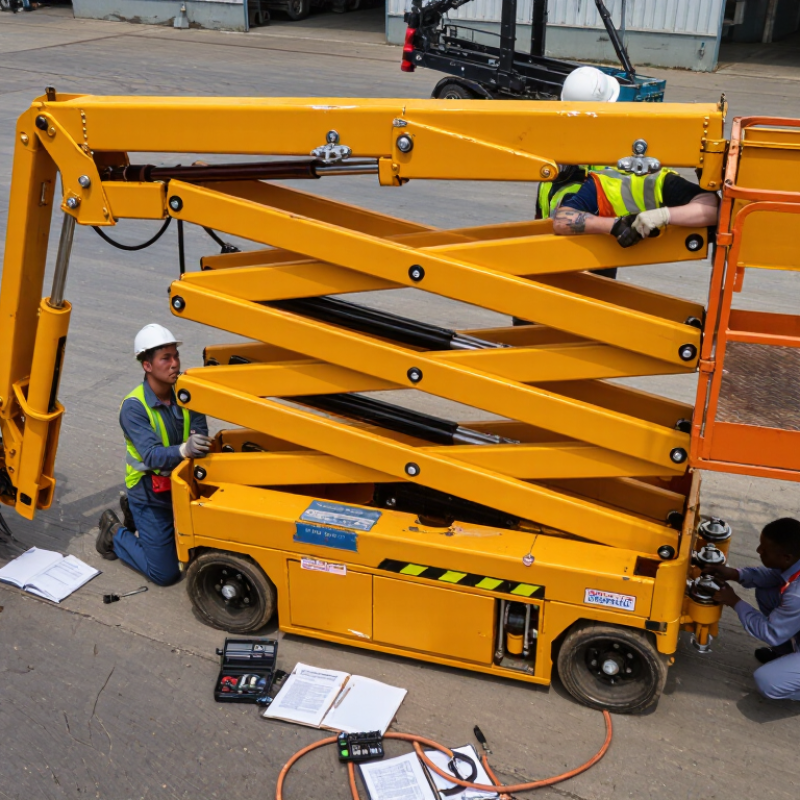
Walk around the machine slowly. Check the boom welds for hairline cracks, impact marks, and uneven repairs. Inspect pins, bushings, tires, outriggers, platform rails, and hydraulic cylinders. Then test every function at low speed, including emergency lowering and platform controls. Listen for pump noise. Watch for cylinder drift.
Request service records, inspection certificates, fault codes, and a cold-start demonstration. A warm engine may conceal difficult starting or excessive smoke. Verify the hour meter against maintenance history. That detail is often overlooked.
No checklist replaces judgment. A qualified technician should inspect the lift under load and review manufacturer requirements. Budget for defects you cannot see. The cheapest machine may become the most expensive decision.
Before buying a used boom lift, match its serial number across every document. Check the registration record, ownership history, purchase invoices, and any lien release. A clean-looking folder is not proof of clean ownership. I would also compare the serial plate with the frame, control station, and hydraulic compartment. Mismatched numbers deserve a pause.
Request complete service records, including annual inspections, load tests, repairs, and safety-related recalls. IPAF’s Global Safety Report 2024 recorded 118 powered-access fatalities across 20 countries during 2023. Falls from platforms were among the leading causes. Missing inspection records can therefore indicate more than poor administration. They may hide repeated overloads, structural damage, or neglected emergency systems. BLS data also reported 1,069 fatal work injuries in construction in 2023, showing why equipment history must be treated as safety evidence, not paperwork.
Ask the seller for rental return reports and previous operator damage notes. Look for phrases such as “temporary repair,” “intermittent fault,” or “monitor.” Those small words matter. Verify the last inspection date against the machine’s working hours. An unusually low hour count with heavy tire wear should trigger questions. I once trusted a tidy maintenance spreadsheet too quickly; the hydraulic leak appeared only after several boom cycles. That mistake is worth remembering. Have an independent qualified inspector review the records and machine together before money changes hands.
Before buying a used boom lift in 2026, inspect the machine where damage hides: the chassis.
Park it on level ground, engage the brakes, and check for twisted rails, cracked welds, fresh paint, or bent compartments. Look beneath the frame for oil, hydraulic leaks, loose fasteners, and impact marks. Compare both sides. Uneven wear often tells more than a clean exterior. Ask for service records and repair invoices, not verbal promises. A missing record is not proof of abuse, but it raises the inspection standard.
Examine each tire closely. Check cuts, sidewall bubbles, exposed cords, uneven tread, and mismatched sizes. Solid tires can still contain damaging separation. Move the machine slowly in a controlled area, and observe wheel tracking. On the platform, inspect the floor, guardrails, gates, toe boards, anchor points, and control labels. Shake the rails gently; excessive movement deserves professional measurement. Test emergency lowering and platform controls only according to the manual. Stop immediately if motion is jerky. Small faults become expensive.
Structural inspection needs patience. Use a flashlight around the boom base, pins, bushings, turntable, and visible welds. Search for elongated pin holes, rust scaling, fresh weld beads, and deformation near load-bearing joints. A paint touch-up may hide a story. I have sometimes focused too much on hydraulics and missed tire damage, so I now photograph every doubtful area before judging the price. Have a qualified inspector verify cracks, weld repairs, and load-bearing components. Do not buy based on appearance alone. A quiet machine can still carry serious structural risk.
2026 Best Way to Inspect a Used Boom Lift Before Buying?
Inspect the engine when it is completely cold. A warm engine may hide difficult starting or excessive smoke. Check the oil level, coolant color, belts, filters, and visible leaks. Start the engine and listen for knocking, uneven idle, or unusual vibration. Watch the exhaust during acceleration. Blue smoke may indicate oil burning, while thick white smoke can suggest coolant problems. Review maintenance records, but do not trust paperwork alone.
Hydraulic inspection requires patience. Examine every hose for cracking, abrasion, swelling, or fresh oil. Look closely around the pump, valves, cylinders, and fittings. Raise and lower the boom smoothly, without sudden movement or loud whining. Hold the platform in position and watch for drift. Minor seepage can become an expensive repair. I once saw a clean machine with a polished frame, but its hydraulic cylinder slowly dropped under load. That detail changed the buying decision.
Test the battery after the machine has rested. Check terminal corrosion, damaged cables, charging voltage, and battery condition under load. Weak batteries can create misleading control faults. Operate the platform controls, ground controls, emergency stops, alarms, lights, and limit switches. Inspect wiring for loose connections or improvised repairs. The power system should respond consistently, not only during one brief demonstration. A professional inspection with safe test procedures is worthwhile. My own mistake was focusing too heavily on engine sound and overlooking a failing charger. Reliability often hides in small electrical details.
Inspection checklist allocation by major system. The values represent practical checkpoints to review before purchase, not a machine condition rating.
Key focus: Hydraulic leaks, pressure stability, engine condition, battery voltage, charging output, emergency controls, and boom-function performance should all be verified during a complete pre-purchase inspection.
A used boom lift should be tested under real operating conditions, not judged by fresh paint. Start with the controls while the machine is cold. Check the key switch, joystick response, horn, display, emergency stop, and platform controls. Every function should react smoothly without hesitation. Test the deadman pedal and release it during movement. The machine must stop promptly. Small delays matter.
Test every safety device. Open the platform gate and confirm the related interlock works. Check the tilt alarm, overload warning, limit switches, harness anchor, and emergency lowering system. Never accept a machine with bypassed switches or missing labels. A quiet alarm is not a minor flaw. Ask an experienced technician to inspect the wiring and hydraulic system, because hidden damage often appears after extended use.
Drive slowly across a firm, level surface. Test forward, reverse, steering, braking, and platform leveling. Listen for unusual clicking or grinding. Extend, rotate, raise, lower, and retract the boom through its full range. Watch for jerky motion, hydraulic leaks, cylinder drift, or movement that stops unevenly. Use only a controlled test load when qualified to do so. Take photos and record response times. I would not trust a clean machine without these notes; appearance can be misleading.
A used boom lift can look clean and still hide expensive maintenance. A professional pre-purchase inspection should begin with service records, not paintwork.
Compare engine hours, hydraulic hours, repair invoices, inspection dates, and recorded fault codes. EquipmentWatch’s 2024 Rental Rate Blue Book provides ownership and rental-cost benchmarks, but local labor rates can change the calculation significantly.
Inspect the machine cold. Check hydraulic hoses for abrasion, wet fittings, and hardened surfaces. Examine boom pins, bushings, welds, and the turntable for unusual movement.
Operate every function slowly, including emergency lowering, platform controls, alarms, tilt sensors, and limit switches. Inspect tires, batteries, brakes, and structural guards. IPAF’s 2024 Global Safety Report recorded 118 powered-access fatalities during 2023, showing why functional safety devices deserve careful testing.
Ask an independent, qualified inspector to verify the load chart and conduct a documented function test. Then price every defect: parts, labor, transport, downtime, and a second inspection.
A low purchase price may be misleading. One neglected hydraulic leak can spread contamination through valves and cylinders. That gets expensive quickly.
My own review standard would still allow a small cosmetic defect, but not unclear maintenance history or unstable boom movement. Leave room for uncertainty. Reliable records are valuable, yet they are not proof that every repair was completed correctly.
Test the machine when cold. Check the key switch, joysticks, horn, display, emergency stop, and platform controls. Every function should respond smoothly. Small delays matter. Fresh paint proves little.
Drive slowly on firm, level ground. Release the deadman pedal during movement. The machine should stop promptly. Test forward movement, reverse, steering, and braking. Record unusual delays.
Test the platform-gate interlock, tilt alarm, overload warning, limit switches, harness anchor, and emergency lowering system. Never accept bypassed switches or missing labels. Quiet alarms are not minor flaws.
Extend, rotate, raise, lower, and retract the boom through its full range. Watch for jerky movement, cylinder drift, uneven stopping, or hydraulic leaks. Listen for clicking or grinding.
Examine hydraulic hoses for abrasion, wet fittings, and hardened surfaces. Check boom pins, bushings, welds, the turntable, tires, batteries, brakes, and structural guards. Look closely at connection points.
Compare engine hours, hydraulic hours, repair invoices, inspection dates, and recorded fault codes. Ask for clear evidence of completed repairs. Records help, but they are not perfect proof.
An experienced inspector can review wiring, hydraulics, safety devices, and the load chart. Request a documented function test. Hidden damage may appear only after extended operation.
Price every defect, including parts, labor, transport, downtime, and another inspection. A cheap machine may become expensive quickly. One neglected hydraulic leak can contaminate valves and cylinders.
A small scratch may be acceptable. Unclear maintenance history is different. Unstable boom movement should stop the purchase. I might overlook appearance, but not uncertain safety performance.
Buying a used boom lift requires more than a quick visual check. This guide explains How to inspect a used boom lift before buying? Start by reviewing the machine’s documents, ownership records, service history, inspection reports, and operating hours. Then examine the chassis, tires, platform, boom sections, welds, pins, and other structural components for cracks, excessive wear, corrosion, or signs of poor repairs. A careful inspection should also include the engine, hydraulic system, battery, wiring, and other power-related components to identify leaks, unusual noises, weak performance, or expensive repairs.
Before making a decision, operate the boom lift in a safe area and test all controls, emergency stops, alarms, interlocks, leveling features, steering, driving, lifting, and platform functions. Consider regular maintenance costs, replacement parts, transportation, and upcoming service needs. Finally, have a qualified technician perform a professional pre-purchase inspection and provide a written assessment. This process helps confirm the machine’s condition, improve cost planning, and reduce the risk of purchasing equipment with hidden problems.

Kathy lift